
Digital Nomad Gear : The System Behind One-Bag Living
Travel is easy. Living well abroad is not.
Most people don’t realize this until the third week.
The first week is movement.
The second is novelty.
By the third, friction begins to surface.
Sleep quality.
Back pain.
Disorganization.
Decision fatigue.
This is where the gap appears—the one between travel and living abroad.
At that point, gear is no longer a convenience.
It becomes infrastructure with digital nomad gear.
And most people build it wrong.
The Problem: Why Most Travelers Fail Long-Term
The default approach to digital nomad gear is reactive.
You pack what you think you’ll need.
You adjust along the way.
You accumulate fixes instead of designing a system.
It works—for a while.
Then small inefficiencies start compounding:
- The bag is slightly uncomfortable → you walk less
- Your setup is disorganized → you waste time daily
- Your gear isn’t modular → transitions become friction-heavy
None of this breaks the experience immediately.
It degrades it slowly.
And that’s the real risk of long-term travel—not failure, but erosion.
July 2025: The Decision That Changed Everything
When we left Canada in July 2025, we didn’t pack for a trip.
We built a system.
Not perfectly. But intentionally.
We made three decisions upfront—before choosing destinations, routes, or timelines.
We defined our non-negotiables:
- Protect the head
- Protect the back
- Protect the feet
Everything else was optional.
That constraint changed everything.
Because once you remove optionality, you remove noise.
And once you remove noise, you start building something that actually works.
The 3 Non-Negotiables
1. Protect the Head → Insurance
Living abroad exposes you to uncertainty.
Health systems vary.
Costs vary.
Access varies.
This is not an area for improvisation.
We chose coverage designed specifically for nomads and expats—not as a safety net, but as baseline infrastructure.
Get your insurance quote right now and save 20%
2. Protect the Back → The Bag
Your backpack is not luggage.
It is your home in motion.
It determines:
- how you move
- how often you move
- how much friction each transition carries
Most people optimize for aesthetics or capacity.
We optimized for daily usability.
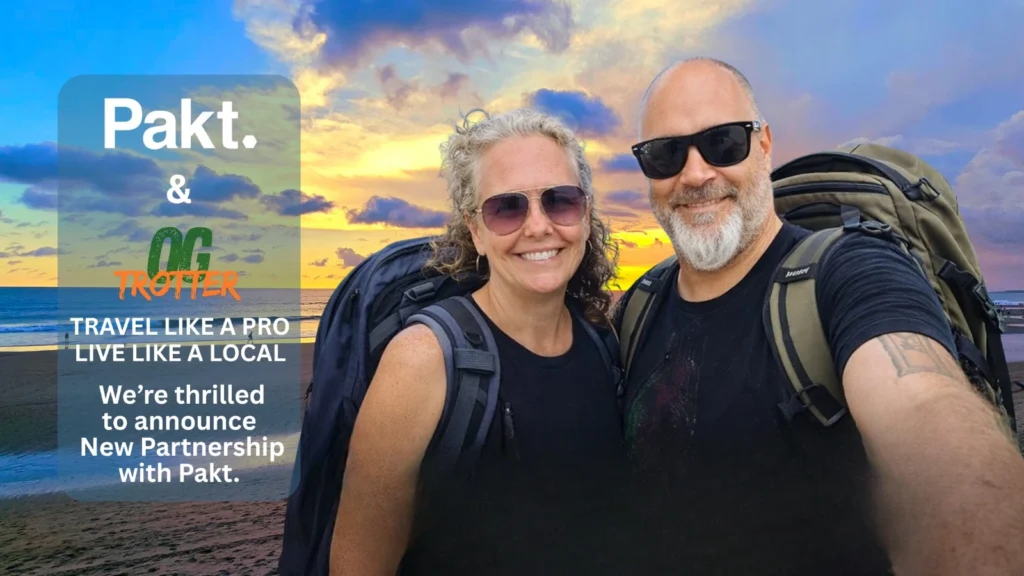
That’s what led us to Pakt.
Not because it looked good.
Because it aligned with how we actually live.
Check Bag Guide for digital nomad gear.
3. Protect the Feet → Footwear
This is the most underestimated layer.
You don’t experience cities through photos.
You experience them through your feet.
Poor footwear limits exploration.
It shortens days.
It reduces range.
We treated this as essential—still evolving, but firmly in the system.
Why We Chose Pakt
Pakt doesn’t position itself like a typical travel brand.
No aggressive marketing.
No exaggerated claims.
Just a simple premise:
Build gear for people who move often—and need it to work every day.
That distinction matters.
Because most digital nomad gear is designed for trips.
Not for life in motion.
Pakt’s approach is closer to systems thinking:
- structured organization
- modular compartments
- durable construction
- minimal wasted space
It’s not trying to impress you in a store.
It’s trying to disappear in your daily life.
And that’s exactly what you want.
What Happened Next: Real-World Proof
We didn’t test this setup in controlled conditions.
We lived with it.
- 75+ cities
- 11+ countries
- Airports, buses, long walks
- Heat, humidity, unpredictability
One bag.
No rotation.
No backup system.
This matters because most gear recommendations are theoretical.
Ours were tested under repetition.
And repetition reveals truth.
The Deeper Insight: Systems > Gear
The mistake is thinking better gear solves the problem.
It doesn’t.
Better systems do.
Gear is only valuable in context:
- how it’s packed
- how it’s accessed
- how it supports your daily rhythm
A well-designed system does three things:
- Reduces decisions
You know where everything is. Always. - Minimizes friction
Transitions become smooth, predictable, repeatable. - Scales across environments
New city, same system.
That’s the real goal.
Not finding the “best backpack.”
But building a setup that works whether you’re in Lisbon, Medellín, or a small coastal town with inconsistent infrastructure.
Mistakes Most People Make
If you strip it down, the same patterns repeat:
1. Overpacking “just in case”
This creates weight, complexity, and friction.
2. Choosing style over function
Looks good in photos. Fails in daily life.
3. Ignoring ergonomics
Back pain is a system failure, not bad luck.
4. No packing logic
Random organization = daily inefficiency.
5. Treating travel like a phase
If you’re living abroad, you need sustainability—not improvisation.
What We’re Building Now
We’re not interested in recommending products.
We’re building an ecosystem.
Pakt is part of that—not as a brand placement, but as a tested component inside a larger system.
What that looks like:
- real-world usage across environments
- structured packing systems
- content that shows what actually holds up over time
- integration into a broader borderless living framework
Because the goal isn’t to own better gear.
It’s to move through the world with less friction.
The Future of Global Living Is Precision
The early version of the digital nomad movement was about freedom.
And that mattered.
But freedom without structure eventually collapses into inefficiency.
The next phase is different.
More intentional.
More refined.
More precise.
People are no longer asking: “Where can I go?”
They’re asking: “Where can I function best?”
And that requires a different mindset.
Not more gear.
Not more movement.
Better systems.
The Real Takeaway
Travel will always be easy with a perfect digital nomad gear.
Living well abroad requires design.
It requires constraint.
It requires discipline.
It requires thinking like an operator, not a tourist.
We learned that the hard way.
Then we built something that works.
And now we refine it.
FAQ
What is the most important piece of digital nomad gear?
Not a specific product—the system behind it. The most important layer is how your gear supports daily life, not just travel days.
Is one bag travel realistic long-term?
Yes, if designed properly. It reduces friction, simplifies movement, and creates consistency across environments.
Why is a backpack so critical?
Because it directly affects mobility, energy, and daily comfort. It’s one of the few items you interact with constantly.
What makes minimalist travel gear effective?
Intentional selection, modular organization, and alignment with your routine—not just reducing quantity.