Can You Become a Digital Nomad After 40 or 50? The Honest Answer From the Road
Sheri and I celebrated our first anniversary on April 17.
In July, OG Trotter will celebrate its first one.
That tells you almost everything about this chapter of my life. Love came with movement. Movement came with risk. Risk came with a new kind of clarity.
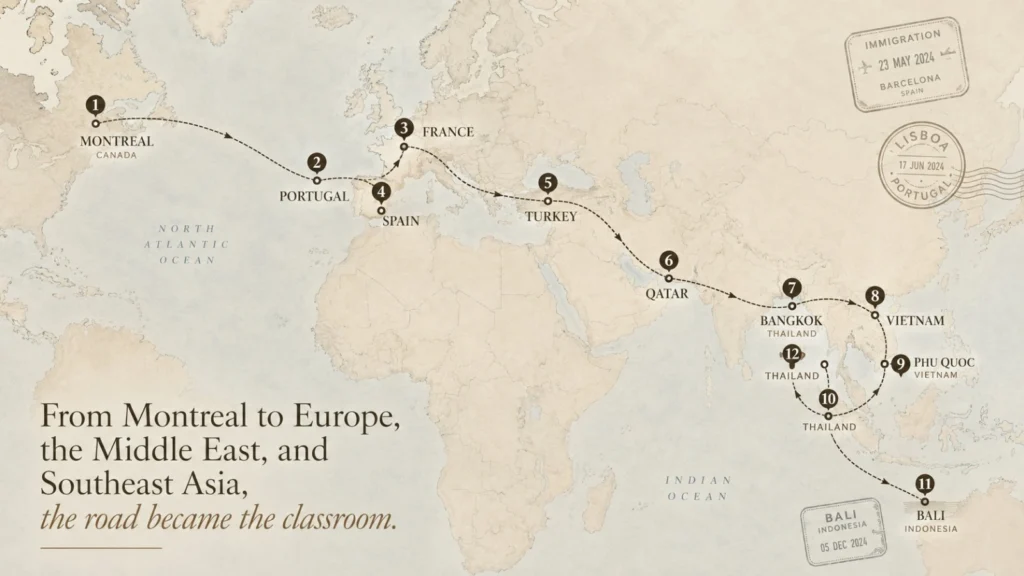
We are in Bali as I write this, after leaving Montreal with two backpacks and moving through Portugal, France, Spain, Turkey, Qatar, Thailand, Vietnam, Phu Quoc, and now Indonesia. Since October 2025, Southeast Asia has become more than a destination for us. It has become a classroom.
The best university I know does not have walls.
It has airports, side streets, mistakes, strangers, cheap coffee, tropical rain, bad Wi-Fi, and mornings where you wake up in a place you once only imagined.
People ask whether you can realistically become a digital nomad after 40 or 50.
The honest answer is yes.
But not if you are waiting to become perfect first.
I Became a Digital Nomad at 52
I became a digital nomad at 52, during the Covid period, when the world was being forced to stop and many of us were being forced to look at our lives without the usual noise.
Before that shift, my life was full.
Not full in the romantic way.
Full in the traffic way. The office-day way. The morning-to-evening obligation way. The kind of full where everybody needs something, everything is urgent, and you barely have enough space to hear yourself think.
I was a solo entrepreneur. That sounds independent from the outside, but anyone who has lived it knows the truth: sometimes independence becomes another form of captivity.
You try to please everyone.
You give your time, your expertise, your knowledge.
Some people appreciate it. Some abuse it.
And while you are trying to be available to the world, the people who matter most can end up paying the real price.
For me, that meant my sons felt too much of my absence.
That is not an easy sentence to write. But it is the truth.
Covid did not magically change my life by itself. It simply interrupted the machinery long enough for me to ask a better question:
Do I really want to go back to the same habits?
My answer was no.
Reinvention Was Not a Fantasy. It Was a Decision.
A lot of people talk about reinvention as if it arrives with soft lighting and a perfect plan.
It does not.
Reinvention is usually messier than that. It comes when the old life no longer fits, but the new one is not fully built yet.
You are between identities.
You are not who you were, but you are not yet who you are becoming.
That is the part many people in their 40s and 50s misunderstand. They think they need certainty before they move.
But certainty usually comes after movement.
The imperfection is the path.
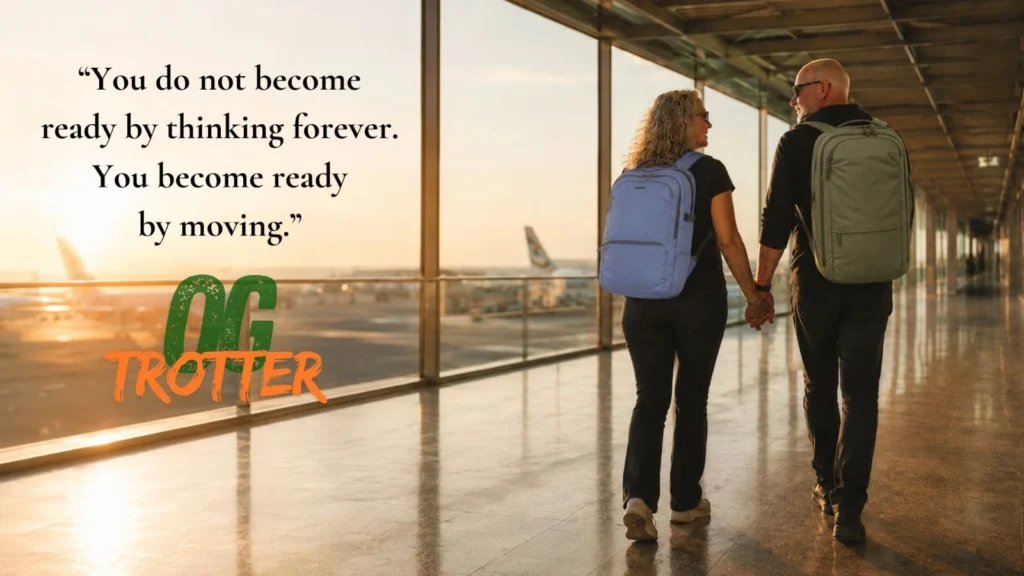
You do not become ready by thinking forever. You become ready by moving, adjusting, and learning.
This Was Not My First Attempt at Movement
The road has always been part of my DNA.
At 19, I left Montreal with $350 and went to Alberta to learn English. I found work at the Fairmont in Kananaskis. I did not have a perfect plan. I had motion, curiosity, and enough discomfort to know I needed something different.
Years later, with my VR company, iFeelvirtuel, I left Montreal again and travelled across Europe. Nice became a serious chapter. Honduras became another. I filmed DJ events, boxing, MMA, and more. I was not just travelling. I was working, creating, testing myself, and following the kind of opportunities that rarely come to people sitting still.
Now, with OG Trotter and Sheri, the chapter is deeper.
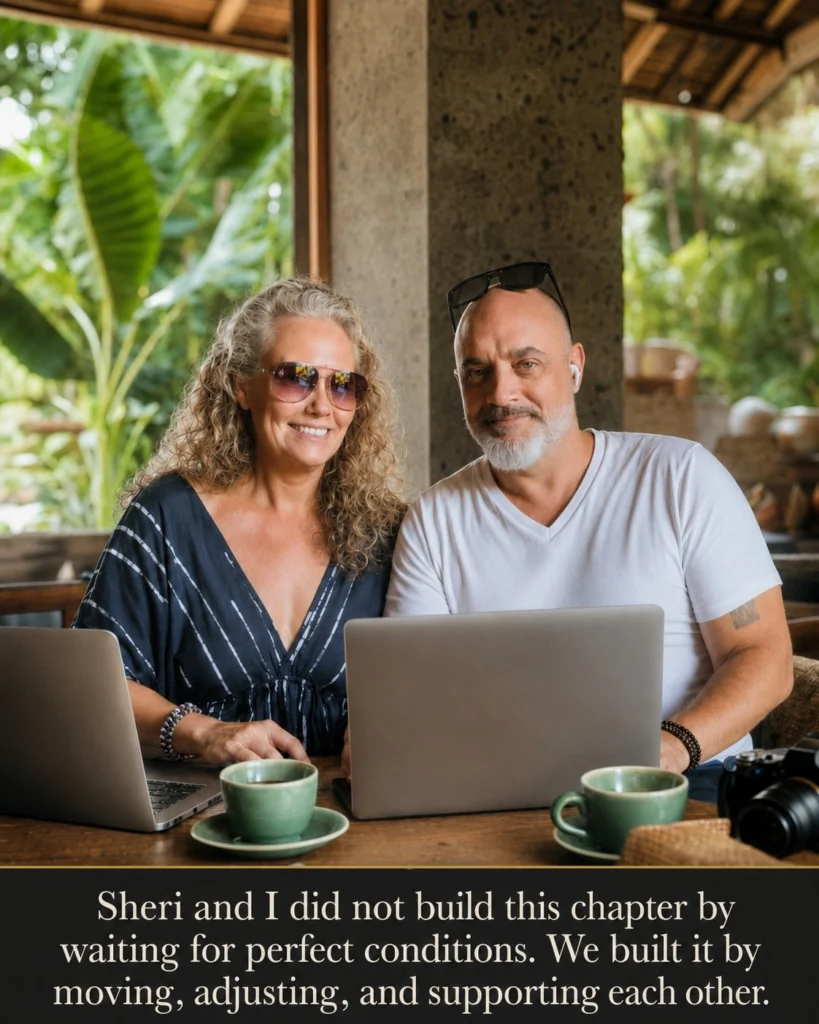
Sheri is not just my partner. She is my soulmate. She believes in me. We complete each other with our strengths and weaknesses. We support each other in the way real partners do: not by pretending everything is easy, but by choosing to move forward together anyway.
That matters.
Because becoming a digital nomad after 40 or 50 is not only a travel decision.
It is a life-architecture decision.
Who you build with matters. What you carry matters. What you finally stop carrying matters even more.

The World Is Too Big to Stay Still
OG Trotter uses a simple line:
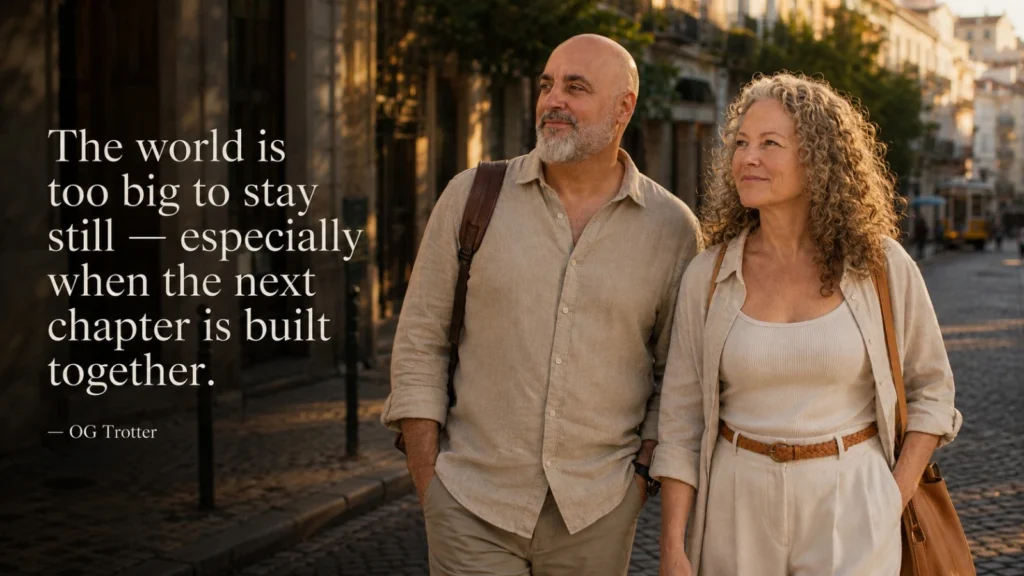
The world is too big to stay still.
For me, that is not a slogan. It is a philosophy.
Anthony Bourdain once captured the spirit of movement better than most: the idea that crossing a border, eating someone else’s food, and walking through another life makes us larger, not smaller.
I believe that.
Movement has a way of confronting your ego.
It reminds you that your way is not the only way. Your city is not the center of the map. Your habits are not laws. Your possessions are not your identity.
The wealth of a person is not only in what they own.
It is in what they know, what they have lived, what they have survived, what they can adapt to, and what they can still become.
More knowledge. More experience. Better mental health. Better physical health. Better judgment.
That is real wealth.
Some People Are Not Waiting for the Right Time
Some people are not waiting for the right time.
They are waiting for life to give them permission.
They say they will move when the house is paid. When the business is perfect. When the kids are older. When the market is safer. When the bank account feels bigger. When they understand everything.
But life does not usually send an official invitation.
And perfection is not something you chase for a better tomorrow.
It is something you learn to live inside the moment you already have.
That does not mean being careless. It does not mean abandoning responsibilities or pretending money does not matter. It means understanding that the perfect moment is often a beautiful excuse.
At 40 or 50, you have already lived enough to know this: something will always be unfinished.
There will always be another bill, another obligation, another reason to wait.
The question is whether waiting is protecting your life or quietly shrinking it.
Dreamers, Haters, and Planners Usually Get It Wrong
People look at the digital nomad life from the outside and often misunderstand it.
The dreamers think it is freedom all the time.
It is not.
The haters think it is running away.
It is not.
The planners think they can spreadsheet every variable before they begin.
They cannot.
This life is not what most people think it is.
It is not vacation. It is not escape. It is not one long beach scene with a laptop and a coconut.
It is work. Movement. Adjustment. Friction. Bad decisions. Better decisions. New people. New opportunities. Occasional loneliness. Unexpected beauty. Real discipline.
You still need to earn. You still need to manage your time. You still need health, systems, relationships, and emotional stamina.
But if you are built for movement, the road gives you something the old routine may have taken away:
space.
Space to think.
Space to create.
Space to reset.
Space to become useful again in a different way.
Fear Is Not the Real Problem. Overthinking Is.
People often ask about fear.
For me, fear was not the main obstacle. I did not want to go back to the old habits. That was stronger than fear.
But for many people, especially after 40 or 50, the problem is not only fear.
It is overthinking.
They think until the idea becomes heavy. They research until the possibility becomes exhausting. They watch other people move and convince themselves those people must have something they do not.
More money. More courage. Fewer responsibilities. Better timing. A cleaner life.
Sometimes that is true.
Often, it is not.
Often the difference is simple:
Some people keep thinking.
Others become doers.
That does not mean moving blindly. It means accepting that action teaches things thinking cannot.
A plan matters. But movement reveals the plan.
The Facebook Problem and the TikTok Lesson
Not long ago, Facebook shut down our OG Trotter account.
I was mad.
Not slightly irritated. Mad.
I made a post. I accused them of having no customer service, no empathy toward the community, and no real understanding of what solo entrepreneurs go through when a platform suddenly cuts off access.
For a couple of hours, I was in that storm.
Then I said to myself: forget them.
And I slept on it.
The next day, the lesson was clearer.
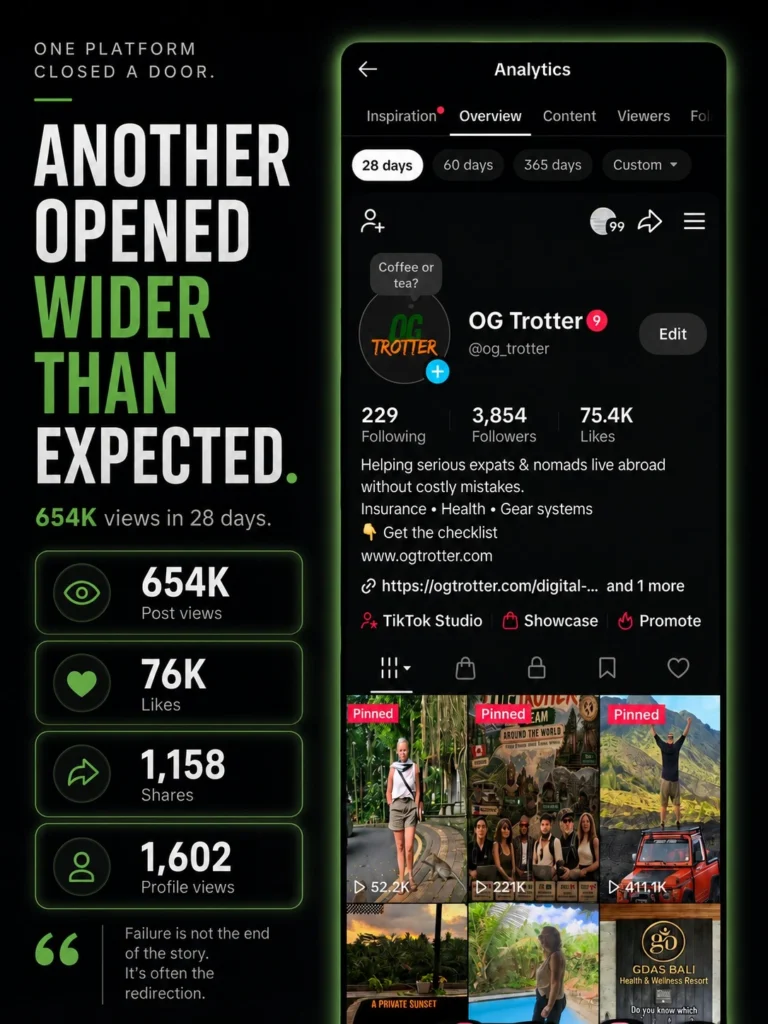
All my life, in some way, I wanted the world to see my work, my creativity, my vision. And while I was angry about one door closing, another door was already wide open.
In the screenshots from our TikTok analytics, OG Trotter had reached roughly 654,000 post views in 28 days, with around 76,000 likes, 1,158 shares, and more than 1,600 profile views during that period. Across the year view, the account showed roughly 658,000 post views.
That did not happen because everything was perfect.
It happened after friction.
It happened after frustration.
It happened because we kept moving.
After a failure or a big loss, you never know what your next major move or achievement will be.
Sometimes the thing that feels like a wall is actually a redirection.
What Becoming a Digital Nomad After 40 or 50 Really Requires
This article is personal, but let’s be practical for a moment.
Can you become a digital nomad after 40 or 50?
Yes, if you understand what the lifestyle actually asks from you.
You need income or a serious plan for income
Romance does not pay rent. Movement is easier when your income can move with you.
That might mean consulting, remote work, entrepreneurship, content, advisory work, freelancing, online services, or a business you are rebuilding for location independence.
At 40 or 50, your advantage is not that you are young.
Your advantage is that you know things.
You have experience. Pattern recognition. Professional history. Mistakes you survived. Skills you can repackage.
Use that.
You need fewer possessions and better systems
The road teaches you what is useful quickly.
When Sheri and I left Montreal with two backpacks, it was not because belongings are evil. It was because too much weight, physical or emotional, slows down the next chapter.
You do not need to own less to prove a point.
You need to own intentionally enough that your life can move.
You need a healthier relationship with imperfection
Flights change. Platforms shut down accounts. Wi-Fi fails. Plans collapse. People misunderstand you. Some opportunities disappear.
Good.
That is where the real education begins.
The perfection is the imperfection.
You need to stop confusing comfort with peace
The old routine can look stable while quietly draining you.
Traffic, office days, obligations, the same conversations, the same frustrations — they can become a kind of slow erosion.
A nomadic life is not always comfortable.
But for the right person, it can be more alive.
There is a difference.
Who This Life Is For
This life may be for you if:
You are still curious.
You are tired of waiting for the perfect time.
You have skills, knowledge, or experience that can travel.
You want to keep learning.
You are willing to simplify.
You are ready to trade certainty for growth.
You understand that movement is not escape when it is done with intention.
It may also be for you if you are 45, 52, 58, or older and quietly wondering whether the most interesting chapter of your life is still ahead.
It can be.
But only if you stop asking life to guarantee the outcome before you begin.
Who Should Not Do This Yet
Not everyone should become a digital nomad tomorrow.
If you are running from every responsibility, pause.
If you have no income plan, pause.
If you think a new country will fix what you refuse to face, pause.
If your relationships, health, finances, or business are in crisis, you may need structure before movement.
The point is not to be impulsive.
The point is to stop using “responsible planning” as a disguise for permanent delay.
There is a difference between preparing and hiding.
Only you know which one you are doing.
Southeast Asia Became Our Classroom
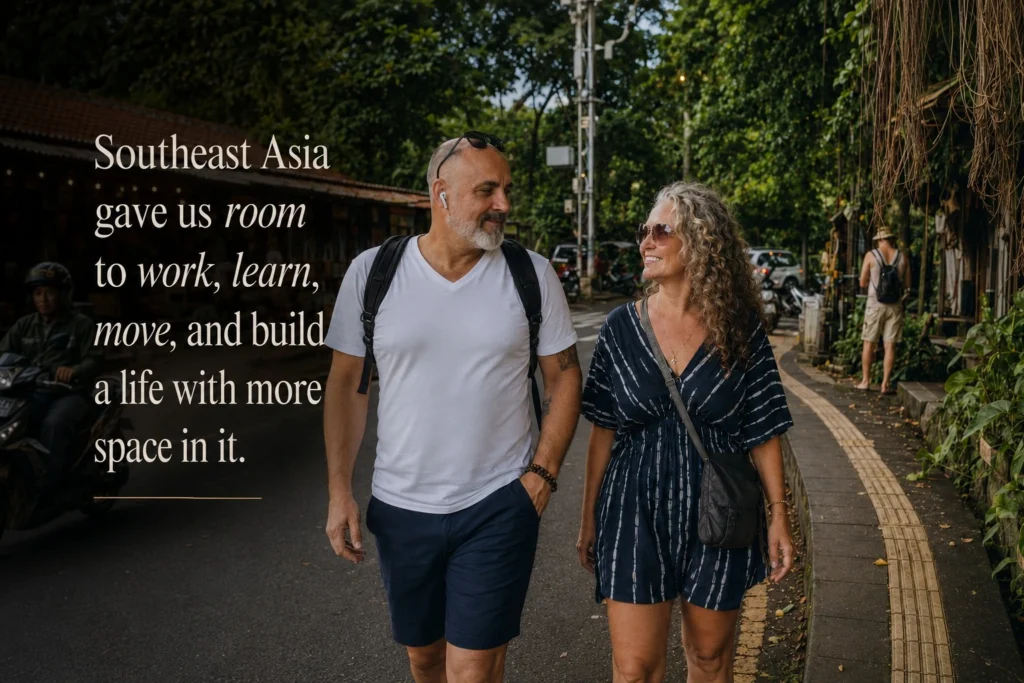
Since October 2025, Southeast Asia has given us the rhythm we were looking for.
Bangkok gave us scale and energy.
Vietnam gave us intensity, contrast, and momentum.
Phu Quoc gave us a different pace.
Bali gave us space to build, reflect, and prepare for the next move.
Now Thailand is calling again.
This part of the world is not perfect. No place is. That is exactly the point.
But for us, Southeast Asia works. It gives us room to work online, meet people, discover opportunity, and keep learning from the best university of life: movement itself.
Some people collect degrees.
I respect that.
But the road gives a different kind of education. It teaches timing, humility, patience, negotiation, observation, and adaptation.
You cannot learn all of that from the couch.
The Honest Answer
So, can you become a digital nomad after 40 or 50?
Yes.
But the better question is:
Are you willing to stop waiting for the version of life where everything is neat, approved, and risk-free?
Because that version may never arrive.
At 52, I did not become younger.
I became clearer.
Clearer about what I wanted to do.
Clearer about what I was obligated to do.
Clearer about who deserved my time.
Clearer about who was abusing it.
Clearer about what my sons had paid for my absence.
Clearer about the kind of partner I wanted beside me.
Clearer about the life I did not want to return to.
That clarity did not come from standing still.
It came from movement.
The world is too big to stay still.
And your life is too short to keep waiting for permission.
Final Verdict
Becoming a digital nomad after 40 or 50 is not about pretending you are 25.
It is about using everything you have already lived as fuel for a more intentional chapter.
Your experience is not baggage.
It is your advantage.
Your age is not the problem.
Your hesitation might be.
The imperfection is the path. Move, adjust, learn, and let the next version of your life meet you on the road.
FAQ
Is 50 too old to become a digital nomad?
No. Fifty is not too old, but the lifestyle requires honesty. You need income, adaptability, health awareness, and a willingness to simplify. The advantage of starting later is that you often bring stronger judgment, deeper experience, and clearer priorities.
Do you need a lot of money to become a digital nomad after 40 or 50?
You need enough money to move responsibly, but you do not need to be rich. More important is having a realistic income plan, lower unnecessary expenses, and a clear understanding of your first destination’s cost of living.
Is becoming a digital nomad after 40 or 50 risky?
Yes, but staying in a life that drains you also carries risk. The goal is not to eliminate risk. The goal is to choose better risks, prepare intelligently, and move with enough structure to learn as you go.
What is the hardest part of becoming a digital nomad later in life?
Often, the hardest part is not travel. It is identity. You have to let go of old routines, old expectations, and sometimes the need to please everyone. That can be uncomfortable, but it can also be liberating.
What is the first step?
Start with a realistic self-audit. Look at your income, obligations, health, relationships, skills, and desired lifestyle. Then test the idea before making a dramatic move. A 30-day or 90-day experiment can teach more than a year of overthinking.
Join The Borderless Brief
If this story speaks to you, join The Borderless Brief — OG Trotter’s newsletter for people building a life beyond borders with more clarity, courage, and practical judgment.
You will get grounded stories, destination insight, and real-world guidance for choosing your next chapter without waiting for perfect conditions.
Join The Borderless Brief.
Need help thinking through your next move?
For serious planners, OG Trotter also offers Base Strategy Sessions — a focused conversation to help you sort through your options, timing, destination fit, and first practical steps.
Book a Base Strategy Session when you are ready to move with structure. Click here