
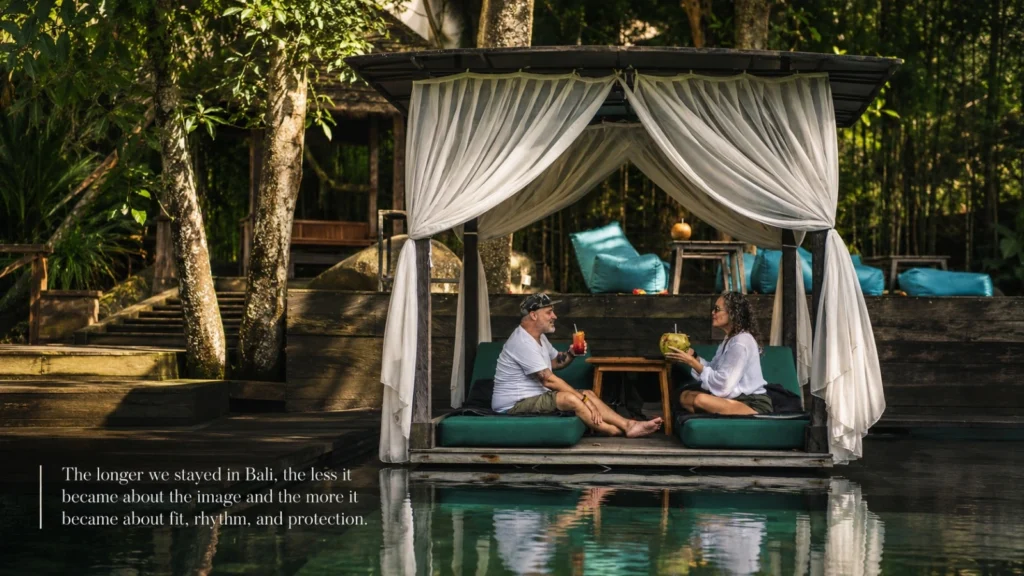
Bali System for Digital Nomads
Bali is one of those places people think they already understand before they arrive.
They have seen the villas, the jungle baths, the beach sunsets, the coworking spaces, the scooters, the smoothie bowls, the spiritual quotes, the impossibly beautiful videos. Bali is sold through a very polished visual language. It looks soft, free, healing, and almost effortless.
That is exactly why it can be misunderstood.
Because Bali is not just a picture. It is a pace. A rhythm. A set of trade-offs. A place that asks a lot more of you than social media usually admits.
For us, the biggest mistake in Bali is coming for the dream without protecting yourself for the reality.
That became clearer the longer we stayed.
We first came planning one month. Then we realized that one month was not enough to understand Bali properly, so we extended our stay. That turned out to be one of the smartest choices we made. The first impression of Bali is one thing. Living inside it long enough to feel the work rhythm, the health habits, the traffic, the energy, the social pull, and the real daily setup is something else.
This article is not a universal formula for Bali. It is simply the system we used in Bali, what worked for us, what did not, and what we think readers should understand before they build their own version.
Why we did not want to experience Bali like tourists
We did not come to Bali just to pass through it.
We wanted to give ourselves a real chance to adapt to the place we had chosen. That matters more than people think. A lot of travelers land somewhere, judge it too quickly, or try to force an identity onto it before they understand how the place actually works.
We wanted the opposite.
We wanted to pay attention.
That meant listening less to the noise of social media and more to what our real life in Bali was telling us. We stayed aware. We tested the pace. We noticed what helped our work, what improved our sleep, what supported our energy, and what looked beautiful but did not actually fit our rhythm.
That became our system.
Not something copied from the internet. Not a one-size-fits-all Bali formula. Just a way of observing the place honestly enough to make better decisions inside it.
Who this article(Bali System for Digital Nomads) is for
This piece is for you if you are drawn to Bali but want a more honest version of the story.
It is for the burned-out professional who wants a reset but knows a place does not become healing just because it is pretty. It is for the pre-move planner trying to understand whether Bali can support real work and real life. And it is for the early nomad who has already learned that freedom without structure quickly turns into fatigue.
It is probably not for you if you only want a vacation list.
Bali can absolutely be joyful. But if you are serious about building a life abroad, even for a season, the better question is not “What looks amazing in Bali?” It is “What would actually make Bali work for me?”
That is the question we kept returning to.
Arrival first, certainty later
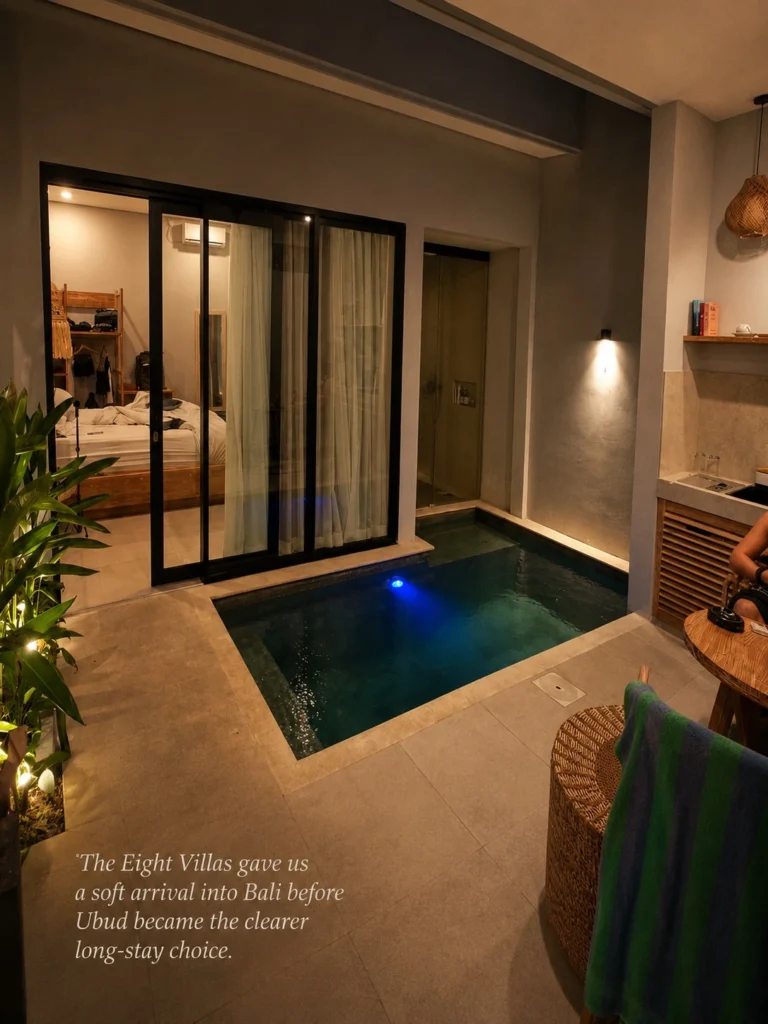
Our first 10 days were in Seminyak, and that turned out to be exactly right.
Seminyak was not our long-term fit, but it was the right arrival phase. It gave us time to adapt to Bali’s pace, observe the flow of the island, and settle our nervous system enough to make a better next decision. That stage matters. Not every place has to be your forever fit. Some places are simply where you land, soften, and learn what the next step should be.
For us, The Eight Villas Bali played that role well. It was affordable, had a light luxury feel, and gave us our own little pool. It felt like a good first base before making a bigger call on whether Ubud was truly our place.
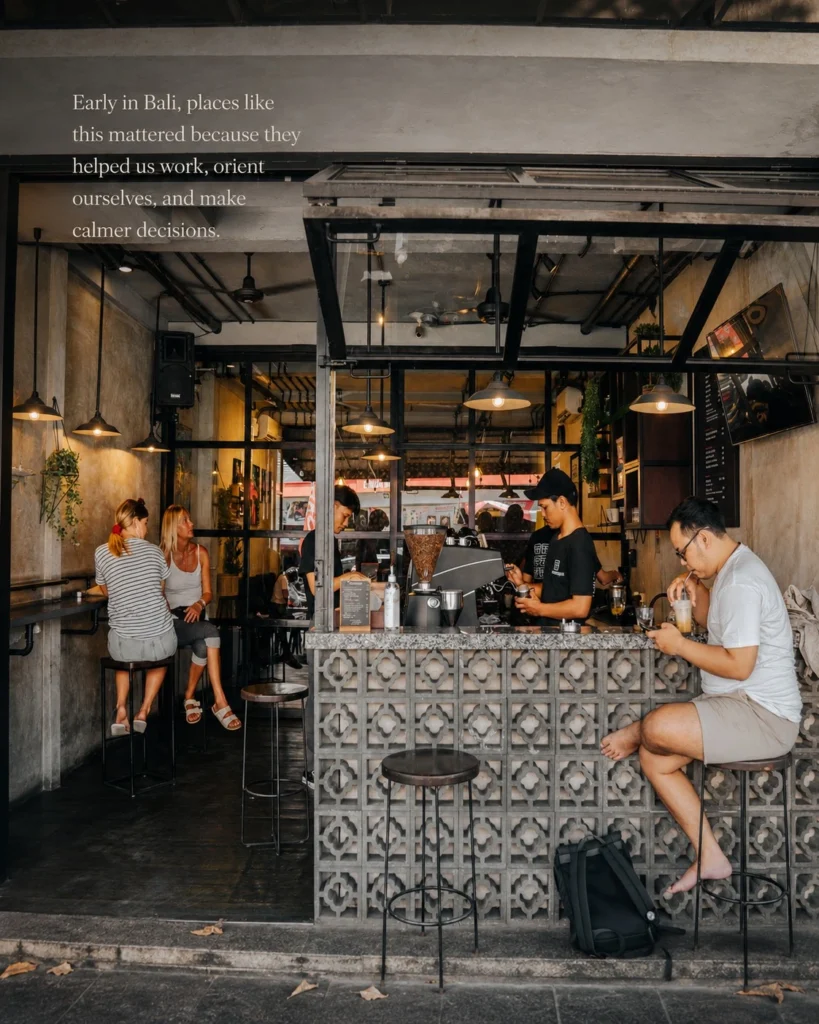
One of the most useful early spots in Seminyak was Kopi Tjinra. It served a completely different role from our later Bali favorites. It was right in front of our hotel, which made it easy, but what really mattered was that it became an arrival-stage work base. We could open our laptops, eat, settle in, and ask questions from a local perspective about where we might want to go next in Bali. That kind of early orientation is underrated. Sometimes the first place that helps you is not the most glamorous one. It is simply the place that helps you think clearly.
Why Ubud became our real fit
We came to Ubud to test it.
We knew almost immediately it was the right fit.
Sheri wanted the jungle life, and once we felt Ubud properly, the decision became clearer. It was the jungle vibe, the spiritual culture, the yoga tribe, and the blend of nomad and expat life that made it feel aligned for us. It was not just beautiful. It felt like the kind of environment that could hold the version of life we were trying to build.
That difference matters.
A place can be attractive and still not fit. Ubud felt like fit.
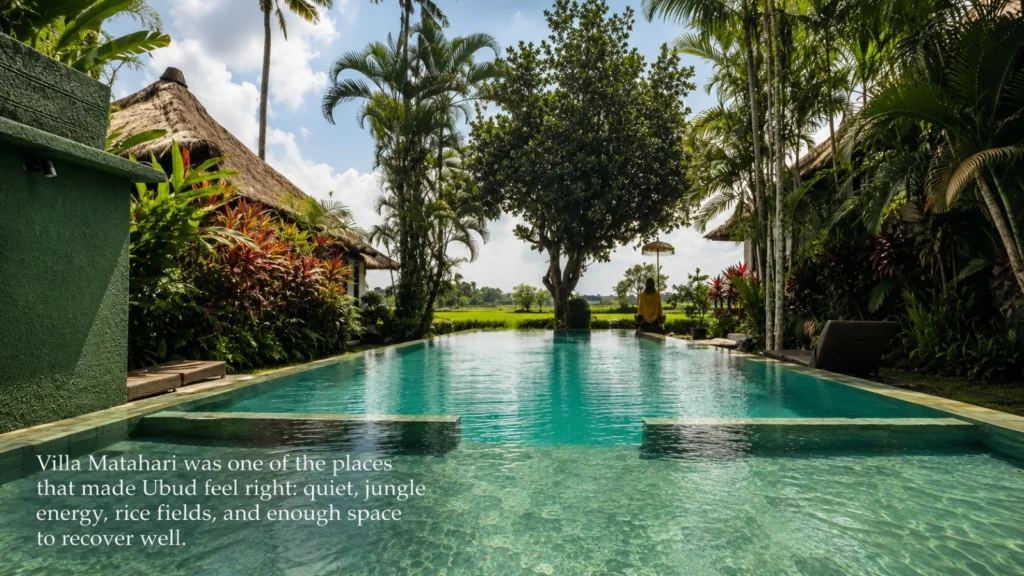
And where we stayed played a major role in that. Villa Matahari ended up being one of the strongest pieces of our Bali system. It had the quiet, the jungle setting, the rice field view, and the sense of space that made daily life feel sustainable rather than stimulating in a way that slowly drains you. It gave us recovery, room, and a calmer rhythm. That kind of setup changes everything. A beautiful island is not enough if your actual base works against your sleep, focus, or nervous system.
There was one small caution, which is worth mentioning because it builds trust: the rooster noise is real. But even with that, Villa Matahari still felt like a much better fit for our actual day-to-day life.
And that contrast became even clearer later, because one of our later stays was simply too noisy for our system. That was a useful reminder that in Bali, the right setup is not a detail. It is the difference between liking the place and actually functioning well there.
The places that held our rhythm together
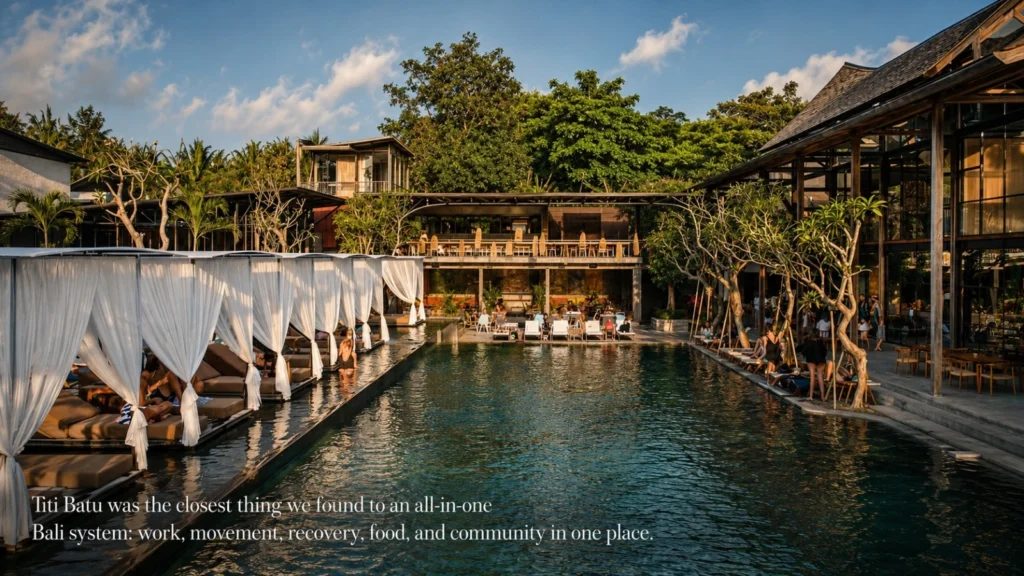
One of the biggest lessons from Bali is that the right places do more than entertain you. They hold your rhythm together.
For us, the clearest example was Titi Batu.
If one place combined everything for us, it was that one. Coworking, gym, team room, sauna, cold plunge, amazing food, pool, yoga, basketball, even a skateboard park. It was not just a place we liked. It was a place that made life easier. That matters more than people realize. When one place supports your work, your movement, your recovery, and your social energy, it becomes more than a recommendation. It becomes infrastructure.
The staff and management were also a big part of why it stood out. Kindness is easy to say. Real attentiveness is rarer. Titi Batu felt like a place where details were considered, and that changes how supported you feel.
Then there were the places that helped with a more specific rhythm.
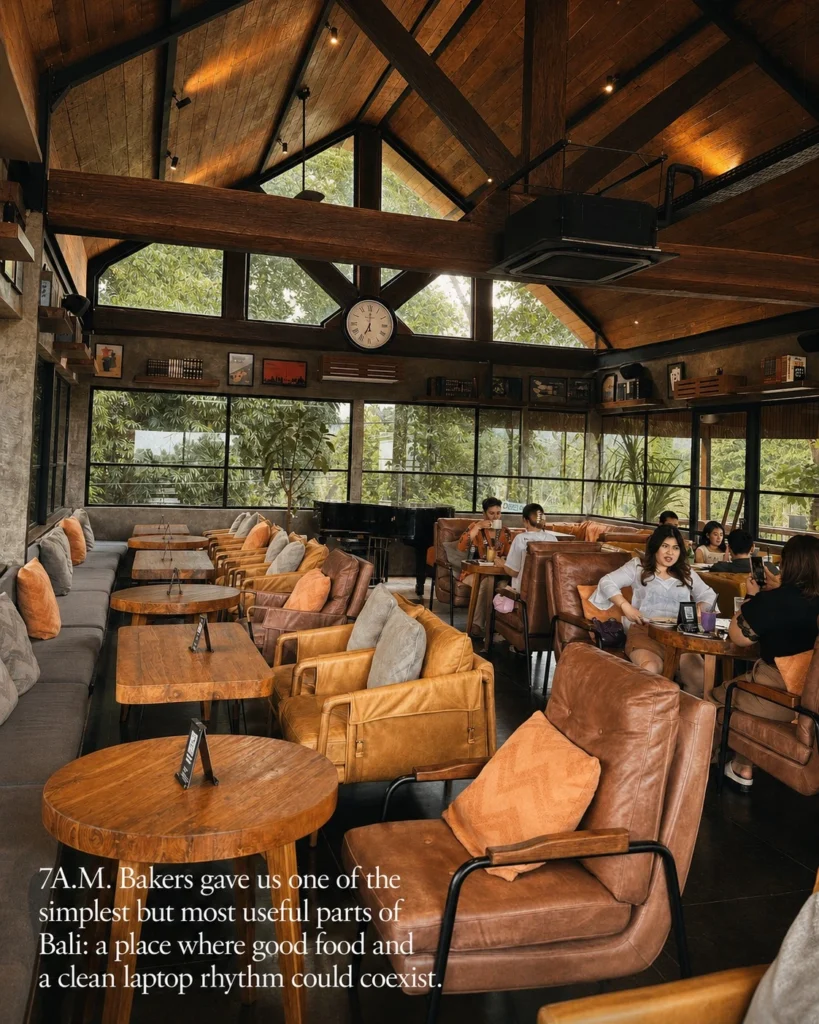
7 A.M. Bakers was one of those. It became a good food and laptop rhythm place for us. Not every work-friendly café is really good for work. Some are more aesthetic than useful. This one supported a gentler work flow, where eating and working could coexist without the place turning into social noise.
Ubud Yoga Centre played a different role. That was Sheri’s doorway into the real yoga culture of Ubud, but she convinced me to start yoga too, and it became the best place for my first class. That made it more than a recommendation. It became part of how Bali began changing us slightly from the inside. There are places that match the cliché of a destination, and there are places that let you understand why the cliché exists. Ubud Yoga Centre felt like the second kind.
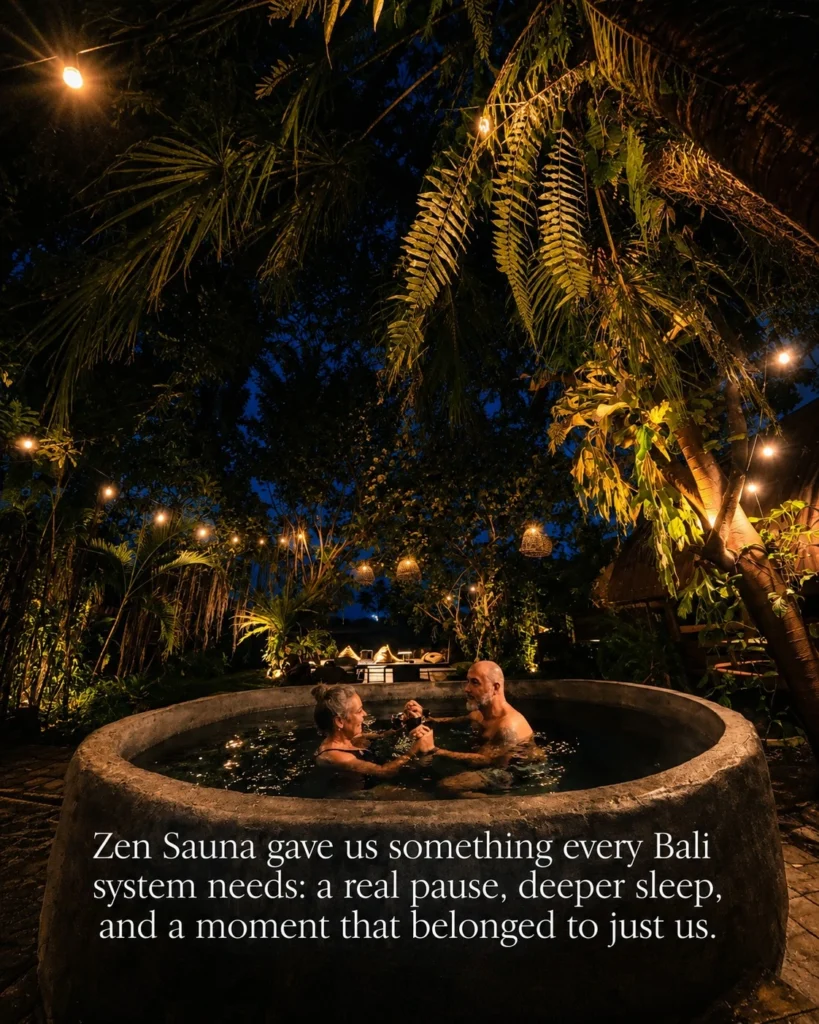
And then there was Zen Sauna Ubud. That one mattered in a quieter way. It was a first experience for both of us, and it gave us a real “us moment” away from work. The sauna and cold plunge were exactly what we needed. It helped us reset and sleep deeply that night. That is not a small thing. When you are building life abroad, the places that help your relationship, your nervous system, and your rest often matter more than the places that just look impressive online.
What changed after the first month
This is where Bali became more interesting.
In the first month, Bali felt exciting, rich, and full of possibility. After that, the real story started to reveal itself.
The questions became less about novelty and more about rhythm.
Could we protect our work flow? Could we keep our energy stable? Were we sleeping well? Was social life adding to the experience or scattering it? How much did traffic change the quality of a day? Which places actually supported us, and which ones only looked like they would?
That shift is part of why we extended our stay.
We needed more time to understand the full Bali experience, not just the first impression of it. And what we learned is something we now trust more than the pictures: Bali rewards people who adapt deliberately. It is not a place where you should blindly follow what looks ideal online. You need to give yourself time to see what the place does to your work rhythm, your health, your movement, your relationship, your attention, and your daily decisions.
That was our system.
Observe. Adapt. Stay aware. Ignore the noise. Choose what supports real life.
The Bali experiences that added to life instead of draining it
Not everything in Bali has to be productive to be worthwhile.
But the best experiences, for us, were the ones that added to our life rather than pulling us away from it.
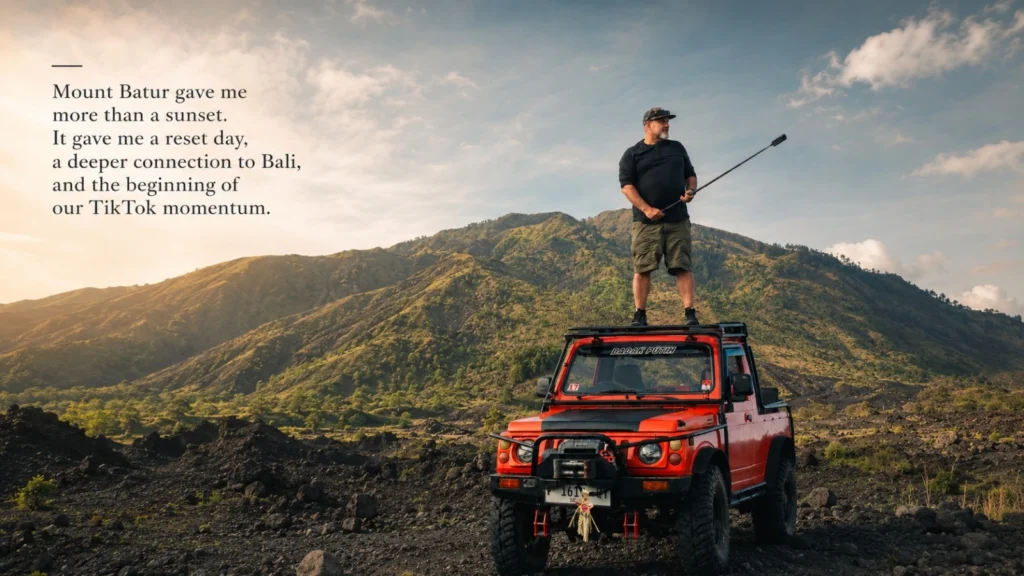
Mount Batur with Wardana and the Jeep experience was one of those. It was memorable, a reset day, a content day, and something that helped us connect more deeply with the island. It also became our first viral video, with 650,000 views and 95,000 likes on TikTok in just one month. In a way, it marked the beginning of our TikTok journey. But what mattered more is that it felt like one of those experiences that gave us something back. It was not just another activity. It deepened the Bali chapter.
OMMA Jungle Club played a softer role. It was a fun day without heavy party energy, the kind of place that works when you want to celebrate without feeling like you are entering chaos. It also became personal for us because Sheri and I celebrated our first anniversary there with Laurie and Nathan, a couple we met at Ubud Yoga Centre. That is the kind of detail that reminds you what a place can do when your social life is aligned rather than random.
Single Fin in Uluwatu was beautiful too, but in a more occasional way. It worked as a sunset stop before a bigger night out at Savaya. We loved that moment, and the Above & Beyond set made it even more memorable, but that part of Bali was more contrast than lifestyle for us. That is an important distinction. Some places are great occasionally. Not every place that gives you a great evening is where your system will thrive daily.
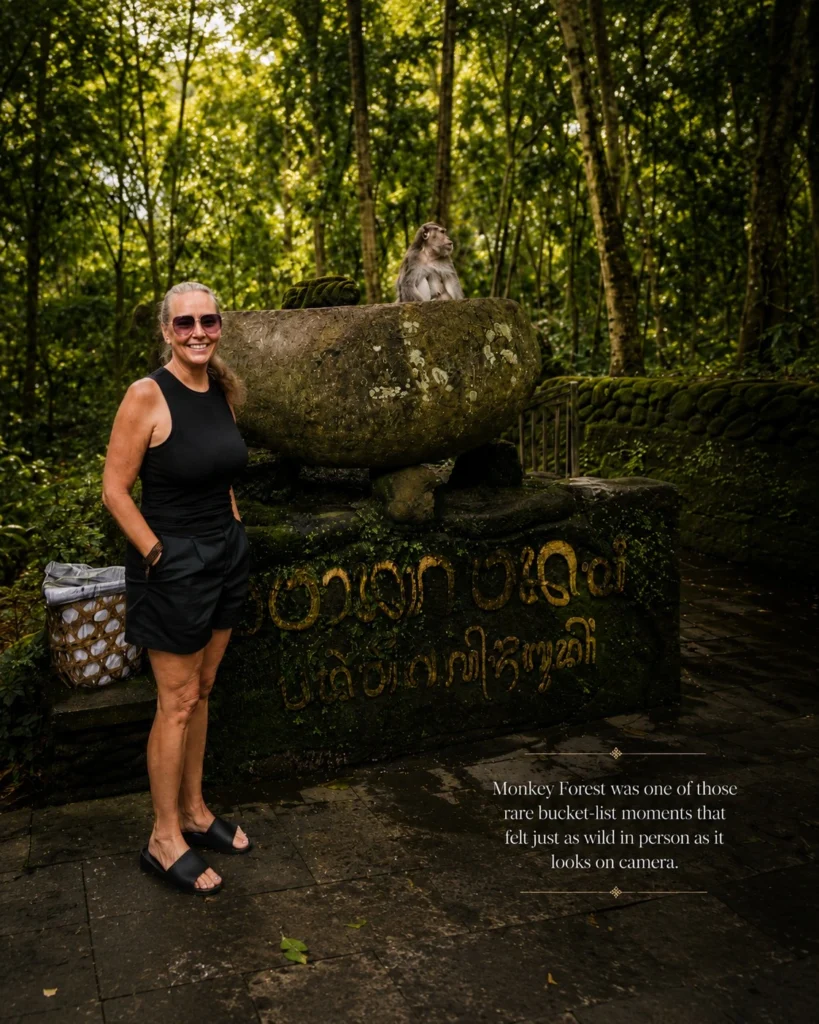
And then there was Monkey Forest. That was a genuine bucket-list moment. We had never been that close to monkeys before, and it became a strong photo and video moment for our social media. It is the kind of experience we would absolutely recommend once, with one practical note: go early. After 10 in the morning, it gets much more crowded.
The reality behind the pictures
This is the part of the Bali conversation that matters most.
Bali is not what most people expect from the pictures.
Or more precisely, the pictures are real, but incomplete.
What they usually do not show is the importance of being protected. They do not show how different traffic feels here if you are not used to it. They do not show the physical reality of scooter life, the risks around sports and activities, or the consequences of treating Bali like a soft-focus fantasy instead of a real place where real things can go wrong.
You do not want to be stuck with hospital fees. You do not want to have an accident and discover too late that your medical options are more limited than you assumed. You do not want to build your Bali life around beautiful visuals and then realize you forgot the layer that makes the rest of it sustainable.
That is why protection matters so much here.
We did have to extend our visa after the first month because we wanted more time to experience Bali properly, and we used Fabio Visa Agency to help make that process smoother. I am mentioning that only lightly because it is not the main story, but it is worth saying that practical support reduces stress, and stress reduction matters more than people think when you are living abroad.
The bigger point is this: Bali works better when you respect the reality behind the pictures.
Insurance. Traffic. Scooters. Physical risk. Recovery. Proper medical attention if something happens.
These are not side notes. They are part of the real Bali story.
Our verdict on Bali
Bali can absolutely be worth it.
For us, it was.
But not because it looked the way it does online.
It was worth it because, once we stopped treating it like an image and started living it like a real place, we found the version of Bali that fit us. Seminyak gave us a landing phase. Ubud gave us the deeper fit. Certain places held our rhythm together. Certain experiences gave more than they took. And the longer we stayed, the more we understood that Bali is less about copying someone else’s dream and more about building a system that matches your actual life.
That is what I would want readers to take from this.
Not that Bali is perfect. Not that Bali is for everyone. And definitely not that our Bali system should be copied exactly.
Only this:
Bali becomes more meaningful when you build your own system inside it, with your eyes open.
And if you do go, do not come only inspired.
Come protected too.
FAQ
Is Bali good for digital nomads?
It can be, especially for people who want warmth, beauty, community, wellness access, and a more intentional lifestyle. But it works far better when you think about protection, rhythm, and fit rather than just aesthetics.
Is Ubud or Seminyak better?
They served completely different roles for us. Seminyak was a very good arrival base that helped us adapt. Ubud became our real fit because the jungle atmosphere, spiritual culture, yoga scene, and nomad-expat mix matched the life we wanted more closely.
How long should you stay in Bali to understand it properly?
For us, one month was not enough. Bali revealed more after the first month, once the novelty settled and the real questions around work, energy, health, social life, and logistics became clearer.
What place supported your Bali system the most?
Titi Batu was probably the clearest all-in-one place for us because it combined work, wellness, movement, and community in one setup. Villa Matahari was also a major part of what made our daily life in Bali feel sustainable.
What is the biggest mistake people make in Bali?
Coming for the dream without protecting themselves for the reality.
If Bali is on your mind, do not only plan the beautiful parts. Protect the real ones too.
Read our guide to Insurance for Expats & Digital Nomads before you build the rest of your setup.