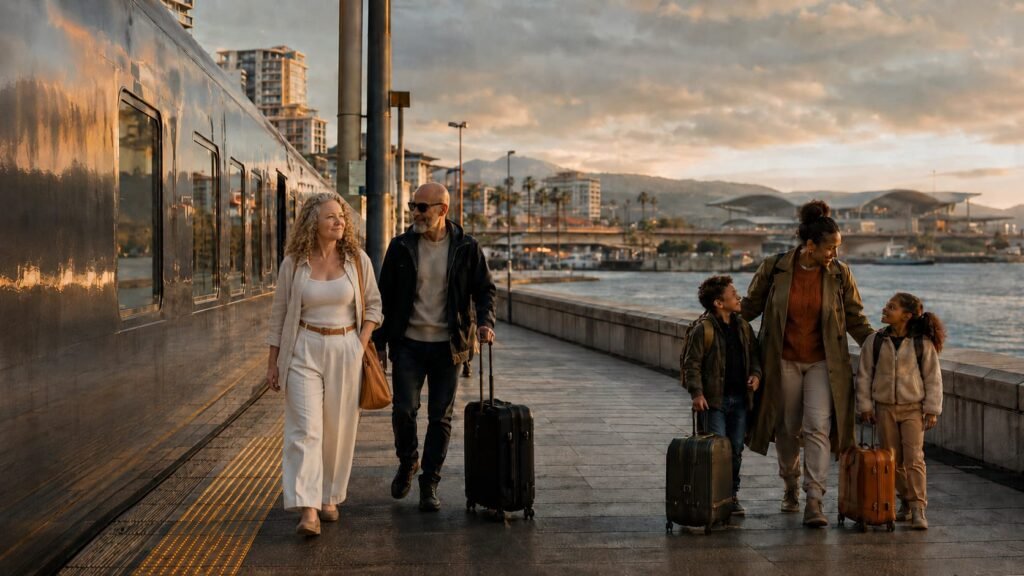
There was a time when travelers were easy to identify.
The backpacker had a backpack. The businessman had a suit. The expat had a local bar where everyone knew his order.
The tourist had a camera, a printed itinerary, and three days to see everything worth seeing.
Then the internet came along and ruined all the categories.
Now the guy drinking Vietnamese coffee beside you might be running a software company in Toronto.
The woman at the next table could be a corporate lawyer working New York hours from Da Nang.
The couple who looks retired might actually own three businesses, spend four months a year in Thailand, three months in Portugal, and have absolutely no intention of “settling down. ” And the twenty-six-year-old in flip-flops?
He may be broke. Or running a company worth seven figures. Hard to tell these days. That is travel in 2027.
The biggest travel trends 2027 will bring are not simply new destinations, new hotels or faster ways to book a flight. They point to a different relationship with work, money, time and movement.
The old stereotypes still exist. But they are mixing. The tourist becomes the remote worker. The remote worker becomes the entrepreneur. The entrepreneur becomes the slow traveler.
The slow traveler becomes something else entirely. And increasingly, the real question is not: Where are you going? It is: What kind of life are you building while you move?
That may be the most important signal inside travel trends 2027. Not another destination. Not another hotel. Not another list of places you are supposed to visit before you die. A different relationship with movement itself.
Table of Contents
- The 20 Traveler Types Shaping Travel Trends 2027
- Travel Trends 2027 and the Great Slowdown
- Who Actually Wins?
- The $8,000 Question
- Why “What Is the Cheapest Country?” Is the Wrong Question
- Digital Nomad Life Is No Longer Just a Young Person’s Story
- The Five Traveler Types We May See More of by 2030
- Maybe We Need a New Word
- Frequently Asked Questions About Travel Trends 2027
- What Travel Trends 2027 Reveal About Freedom
- Start Your Move
- Sources and About the Author
The 20 Traveler Types Shaping Travel Trends 2027
How to read the scores: Freedom measures control over location, schedule and movement. Financial opportunity measures income portability, resilience and scalability – not guaranteed earnings or investment returns. Scores are OG Trotter editorial assessments for comparison, not scientific measurements.
| Traveler Type | Typical Pace | Main Motivation | Freedom | Financial Opportunity |
|---|---|---|---|---|
| Location-Independent Slow Entrepreneur | 1-6 months | Build while living well | 10/10 | 10/10 |
| Slomad | 1-3 months | Depth over speed | 9.5/10 | 8.5/10 |
| Geo-Arbitrage Expat | Long stay | Purchasing power + quality of life | 8.5/10 | 9.5/10 |
| Creator-Entrepreneur | Flexible | Audience + ownership | 9.5/10 | 9.5/10 |
| Remote Professional Abroad | Weeks to months | Salary + mobility | 8/10 | 8.5/10 |
| Portfolio Nomad | Flexible | Multiple income streams | 9.5/10 | 9.5/10 |
| Bleisure Traveler | Days to weeks | Extend work travel | 6.5/10 | 8/10 |
| Solo Explorer | Flexible | Independence | 9/10 | 6.5/10 |
| Wellness Traveler | Days to weeks | Health + recovery | 7.5/10 | 7.5/10 |
| Medical Traveler | Treatment based | Healthcare | 6/10 | 6/10 |
| Base Builder | Months / recurring | Familiarity + mobility | 9/10 | 9/10 |
| Value Optimizer | Flexible | Spend intelligently | 8/10 | 7.5/10 |
| Experience Traveler | Trip based | Adventure + memory | 8/10 | 6/10 |
| Food & Culture Traveler | Trip based | Local life | 8/10 | 6.5/10 |
| Climate Traveler | Seasonal | Weather + comfort | 8.5/10 | 7/10 |
| Nomadic Family | Slow | Education + family life | 8/10 | 7.5/10 |
| Multigenerational Traveler | Trip based | Family time | 5.5/10 | 5.5/10 |
| Premium Slow Traveler | Weeks to months | Comfort + time | 8.5/10 | 7/10 |
| Conscious Traveler | Slow / selective | Lower-impact travel | 7.5/10 | 5.5/10 |
| Backpacker 2.0 | Fast to flexible | Adventure + mobility | 9/10 | 4.5/10 |
Travel Trends 2027 and the Great Slowdown
Evidence: MBO Partners’ 2025 Digital Nomad Trends Report
For years, digital nomad culture was built around movement. Bangkok. Bali. Chiang Mai. Lisbon.
Medellín. Next month, somewhere else. More stamps. More flights. More proof that you were free.
Except constant movement has a funny way of turning freedom into logistics. Airports. Checkouts. SIM cards. Laundry.
Finding another apartment. Finding another gym. Finding another café where the Wi-Fi actually works. Starting over every three weeks. Eventually, some people figured something out.
Maybe freedom wasn’t moving all the time. Maybe freedom was being able to stay.
Digital nomads have already begun slowing down, visiting fewer destinations and spending longer in each place.
The shift is measurable. MBO Partners reported that the average American digital nomad visited 6.2 locations in 2025, down from 7.2 in 2023. Average time per stop rose from 5.4 weeks to 6.4 weeks over the same period. Slomading is not merely a mood. It is a documented change in behavior.
That is not a minor behavioral shift. It is the beginning of a different philosophy. Stay long enough to learn the name of the woman making your coffee. Stay long enough to know which restaurant is good and which one merely photographs well. Stay long enough to stop needing Google Maps.
Stay long enough for somewhere to become ordinary.
That is when travel gets interesting.
Related OG Trotter guide: The Real System Behind Digital Nomad Life
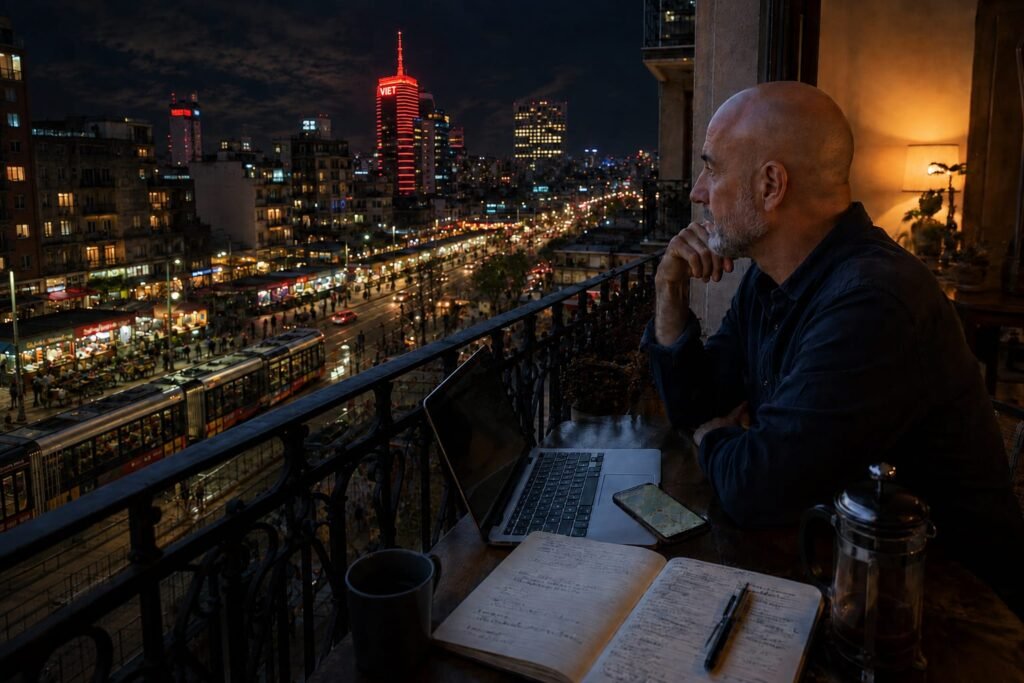
1. The Location-Independent Slow Entrepreneur
This may be the most interesting traveler of 2027. Not because they travel more. Usually they travel less. They simply have more control.
They may own an agency, consultancy, e-commerce company, software business or media operation.
Their customers could be in London, New York or Toronto. Their apartment might be in Vietnam. Lunch costs six dollars. The internet works. The beach is ten minutes away.
And nobody particularly cares where the office is. They stay one month. Maybe three. Maybe six. They work.
They live. They build something. And when the place stops working for them, they leave. No dramatic farewell. No identity crisis.
Just another flight. This is geo-arbitrage in its grown-up form. Not: Where can I live cheapest? But:
Where can I live exceptionally well while continuing to build? That distinction matters.
Freedom: 10/10 | Financial opportunity: 10/10
This traveler isn’t escaping work. They have simply stopped accepting the idea that work gets to decide where life happens.
2. The Slomad
The slomad is what happens when the digital nomad gets tired. Not tired of travel. Tired of the circus around travel. The packing. The airport lounges.
The endless “Top 10 Things to Do” lists. The obligation to constantly be somewhere new. So they rent an apartment for two months. They find a favorite noodle shop. They buy groceries.
They join a gym. They work Tuesday. They do absolutely nothing on Wednesday afternoon. They begin living somewhere instead of consuming it. This person is still mobile.
But movement is no longer the point.
Typical stay: one to three months
Freedom: 9.5/10 | Financial opportunity: 8.5/10
The economics work too. Fewer flights. Better monthly accommodation rates. Less frantic spending. More productive work.
Slow travel turns out to be good not only for your head. It can be good for your bank account.
3. The Geo-Arbitrage Expat
This traveler has discovered one of the great asymmetries of the modern world. You do not necessarily have to earn where you live.
Someone earning American, Canadian, British or European income while living in Southeast Asia may experience an entirely different level of purchasing power.
But the intelligent version of geo-arbitrage is not chasing the cheapest bowl of noodles on Earth.
Cheap can become expensive very quickly when the hospital is bad, the internet doesn’t work, the air is unhealthy or you spend half your life fighting bureaucracy.
The real calculation is more sophisticated. Housing. Healthcare. Taxes. Visas.
Safety. Air quality. Internet. Food. Airport connectivity.
Community. Quality of life. And then there is the one thing spreadsheets rarely capture: Do you actually like being there? Because saving money in a place you hate is not financial freedom.
It is merely cheaper misery.
Freedom: 8.5/10 | Financial opportunity: 9.5/10
4. The Creator-Entrepreneur
Once upon a time, travel media required a television network, editors, producers and a considerable budget.
Now it may require a phone, a microphone and somebody with something worth saying. The barrier to entry collapsed. The barrier to being interesting did not. The creator-entrepreneur of 2027 is increasingly less interested in being an influencer. Followers are useful.
The creator economy is now part of the mobility story. In MBO Partners’ 2025 study, 49% of digital nomads reported earning money in the creator economy. That does not mean half are thriving. It means content, distribution and portable income are increasingly intertwined.
Ownership is better. They build newsletters. Products. Memberships. Courses.
Events. Affiliate businesses. Consulting. Media intellectual property. Brand partnerships.
Sometimes they still post sunset videos. But the sunset isn’t the business. Distribution is.
The creator economy continues to grow, but there is an uncomfortable truth behind the numbers:
Most creators will never build a meaningful business. That’s the part nobody puts in the bio.
But for those who understand audience, commerce, ownership and distribution, the upside can be significant.
Freedom: 9.5/10 | Financial opportunity: 9.5/10
High opportunity. High uncertainty. No pension department.
5. The Remote Professional Abroad
There is something quietly revolutionary about receiving your salary in one country while eating breakfast in another.
The remote professional doesn’t necessarily want to become an entrepreneur. They may like their job. They may like health insurance. They may enjoy knowing exactly how much money lands in the bank every second Friday. Fair enough.
Their freedom exists inside corporate boundaries.
Those boundaries matter. Working from another country can create immigration, tax, employment, cybersecurity and insurance questions for both worker and employer. A beach view does not cancel a company policy or a local law.
That means VPN policies. Time zones. Manager approval. Tax rules. Occasional meetings at unfortunate hours.
And the lingering possibility of somebody from headquarters suddenly rediscovering the office.
Still, compared with the old Monday-to-Friday commute, this is a substantial amount of freedom.
Practical resource: Jobs & Work Abroad
Freedom: 8/10 | Financial opportunity: 8.5/10
6. The Portfolio Nomad
This person doesn’t trust one paycheck. Probably wisely. Maybe they consult. Own a small company. Sell a digital product. Create content.
Invest. Advise another business. Five income streams. None individually impressive enough for a motivational video. Together?
They work.
This is a particularly resilient form of digital nomad life because losing one client, one platform or one employer doesn’t necessarily end the entire lifestyle.
The portfolio nomad understands a useful rule: Dependence and freedom rarely get along.
Freedom: 9.5/10 | Financial opportunity: 9.5/10
7. The Bleisure Traveler
The name is terrible. The idea is not. Business sends you to Singapore. The meeting ends Thursday. The company paid for the long-haul flight.
So instead of immediately going home, you stay through Sunday. Maybe longer. Perhaps you work remotely from Thailand the following week.
Suddenly a business trip becomes a personal trip without paying for the most expensive part of the journey.
Freedom: 6.5/10 | Financial opportunity: 8/10
Corporate travel finally provides something more interesting than expense reports.
8. The Solo Explorer
Solo travel used to come with questions. “Are you going alone? ” “Yes. ” “Why? ” Because maybe I want to. That increasingly seems to be enough. Solo travelers are not necessarily antisocial. Quite often they are aggressively social.
They simply want to choose when. Dinner with strangers tonight. Nothing tomorrow. A group excursion Saturday. Three hours alone in a café Sunday morning.
Freedom without isolation. Community without obligation.
Freedom: 9/10 | Financial opportunity: 6.5/10
There is an enormous hospitality opportunity hiding here. Not loneliness. Optional connection. There is a difference.
9. The Wellness Traveler
For decades, travel excess was almost part of the deal. Eat too much. Drink too much. Sleep badly. Come home needing another vacation.
A growing number of travelers want the opposite. Sleep. Movement. Healthy food. Sauna.
Yoga. Diagnostics. Recovery. Nature. Maybe a little silence.
Wellness travelers may not be the largest group.
They operate inside a much larger economic shift. The Global Wellness Institute valued the worldwide wellness economy at $6.8 trillion in 2024 across eleven sectors. That figure is broader than wellness tourism, but it explains why hotels, destinations and travelers increasingly treat sleep, movement, nutrition and recovery as part of the trip rather than an interruption to it.
But they are one of the most economically valuable.
Freedom: 7.5/10 | Financial opportunity: 7.5/10
The opportunity around them is enormous: Hospitality. Food. Retreats. Fitness.
Preventive health. Recovery. Longevity. There is a lot of money in helping people feel better. There is even more value when they actually do.
10. The Medical Traveler
This is where travel stops being lifestyle content and becomes serious.
Someone flying internationally for dental work, surgery, diagnostics or treatment is not choosing a destination primarily because of rooftop cocktails.
They want competence. Trust. Price transparency. Accreditation. Recovery support.
Logistics. Aftercare. And ideally, no surprises. Medical travel can make extraordinary sense in some circumstances. It can also go badly.
This section is educational, not medical advice. Anyone considering treatment abroad should independently verify clinician credentials, facility standards, informed-consent procedures, total costs, complication protocols, insurance implications and continuity of care after returning home.
Planning resource: Insurance for Expats and Digital Nomads
Which is why anyone operating in this space should spend considerably less time making promises and considerably more time asking uncomfortable questions.

Freedom: 6/10 | Financial opportunity: 6/10
11. The Base Builder
Here is where nomadism eventually gets interesting. The traveler stops trying to live everywhere. Instead, they build relationships with a few places. Vietnam. Thailand.
Portugal. Mexico. Maybe home for part of the year. They return. The bartender remembers them.
The dentist has their records. The landlord knows they’re coming back. They know which neighborhoods work. They have friends. Suddenly international living stops feeling temporary.
This person hasn’t settled down. They have settled sideways.
Freedom: 9/10 | Financial opportunity: 9/10
This may be where mature nomadism is heading. Not homelessness with Wi-Fi. Multiple homes without necessarily owning any of them.
12. The Value Optimizer
This traveler doesn’t necessarily spend less. They hate spending badly. Points. Miles. Exchange rates.
Shoulder seasons. Long-stay discounts. Alternative airports. Credit-card benefits. Fare alerts.
Flexible dates. They treat travel like a puzzle. Give them a $3,000 itinerary and they’ll find the same trip for $1,900. Then spend $600 on dinner. Because efficiency is not austerity.
It is deciding what deserves your money.
Freedom: 8/10 | Financial opportunity: 7.5/10
13. The Experience Traveler
They don’t care how many countries they’ve visited. They remember what happened there. Diving with manta rays. Crossing a mountain pass. Riding through rural Vietnam.
Surfing. Climbing. Sailing. Getting lost.
These travelers often spend more than budget travelers because experiences are the currency.
They will sleep in an average room if tomorrow morning involves something unforgettable.
Freedom: 8/10 | Financial opportunity: 6/10
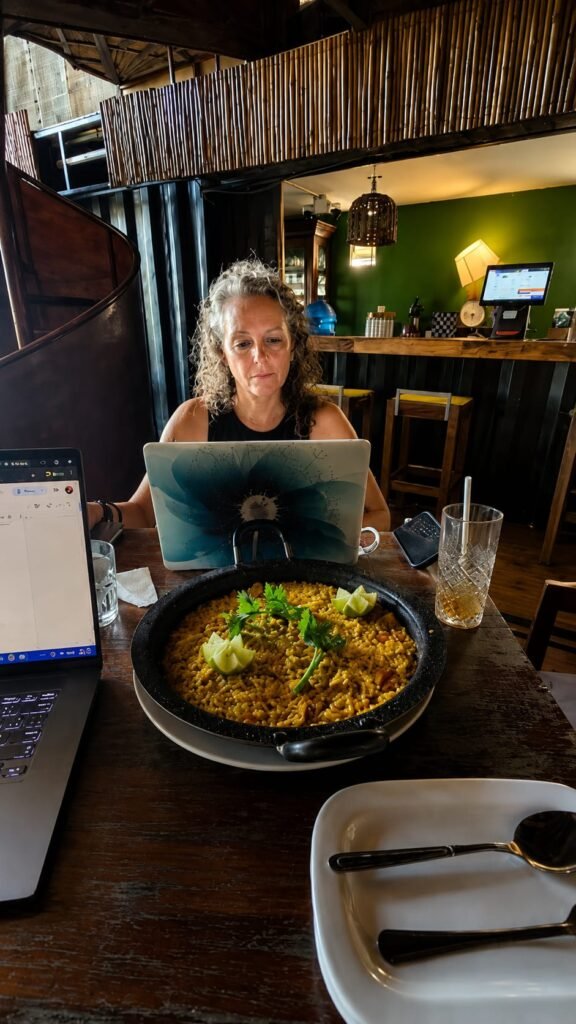
14. The Food and Culture Traveler
There is a certain tragedy in flying halfway around the world to eat exactly what you eat at home.
Some travelers refuse. They go to markets. Street stalls. Family restaurants. Neighborhood cafés.
Places with plastic stools. Places without English menus. Places where the food matters more than the décor. They want to understand how people live. Food happens to be one of the fastest ways inside.
A bowl of soup can tell you more about a place than a sightseeing bus ever will.
Freedom: 8/10 | Financial opportunity: 6.5/10
This traveler rewards places with texture. Not polish.
15. The Climate Traveler
January somewhere warm. April somewhere mild. August somewhere cooler. October somewhere dry.
For people with geographic flexibility, weather increasingly becomes part of lifestyle design.
Why endure six months of winter if you don’t have to?
Why arrive somewhere during the hottest, wettest, most expensive month simply because everyone else does?
The climate traveler quietly follows the comfortable parts of the calendar.
Freedom: 8.5/10 | Financial opportunity: 7/10
The shoulder season may become the new high season for people who can choose.
16. The Nomadic Family
Travel changes when children enter the picture.
The romantic idea of “we’ll figure it out” has a shorter shelf life when somebody needs school, a doctor and breakfast before 8 a.m.
Families care about different things. Space. Healthcare. Education. Routine.
Safety. Community. Other kids. Reliable transport. The worldschooling family is not necessarily trying to give children an endless vacation.
At its best, it is attempting to give them a larger classroom.
Freedom: 8/10 | Financial opportunity: 7.5/10
Done badly, it’s chaos. Done well, it can be remarkable.
17. The Multigenerational Traveler
Three generations at one table. Grandparents. Parents. Children. Everyone wants something different.
One wants culture. One wants the beach. One wants good Wi-Fi. One wants to know why lunch is taking so long.
Yet multigenerational travel keeps growing because time together is increasingly treated as something worth spending money on.
This traveler favors: Villas. Cruises. Large apartments. Private transport.
Flexible itineraries. The logistics are difficult. The emotional value can be enormous.
Freedom: 5.5/10 | Financial opportunity: 5.5/10
18. The Premium Slow Traveler
This is not luxury travel in the traditional sense. No champagne arrival required. No gold-plated bathtub. No need to post the room before you’ve even unpacked. The premium slow traveler has money and doesn’t particularly want to waste it.
They pay for: Space. Comfort. Good mattresses. Excellent food.
Reliable transport. Health. Privacy. Time. And most importantly:
The ability not to rush. A month in Japan. Six weeks in Vietnam. Three months in Spain. No checklist.
No panic. No six-city itinerary in nine days.
Freedom: 8.5/10 | Financial opportunity: 7/10
Real luxury, increasingly, is control over your time.
19. The Conscious Traveler
This traveler has started noticing that sometimes tourism destroys precisely what tourists came to see.
The quiet beach becomes forty beach clubs. The old neighborhood becomes short-term rentals. The local restaurant becomes another branded café. So they look elsewhere. Secondary cities.
Independent businesses. Locally owned accommodation. Places not yet crushed by their own popularity. The danger, of course, is that everyone eventually discovers the undiscovered place. And the cycle starts again.
Freedom: 7.5/10 | Financial opportunity: 5.5/10
Travel rarely leaves no footprint. The reasonable goal is leaving a better one.
That means staying longer when possible, spending with locally owned businesses, respecting resident life and resisting the urge to turn every quiet place into content before the people living there have decided what kind of tourism they want.
20. The Backpacker 2.0
The backpacker survives. Of course they do. Eighteen dollars a night. Overnight bus. Questionable laundry. Excellent stories.
Possibly food poisoning. For generations, this has been one of the great rites of travel. What changes in 2027 is that the backpacker may also be earning money. Editing video. Coding.
Selling something online. Creating content. Freelancing. Working remotely between buses. The line between backpacker and digital nomad is becoming increasingly blurry.
Freedom: 9/10 | Financial opportunity: 4.5/10
High freedom. Low financial structure. At least until they figure out the next part.
So Who Actually Wins?
Wrong question. Travel isn’t a competition. But lifestyle design certainly has trade-offs. If your objective is simply to see more places, the backpacker wins. If comfort matters most, the premium slow traveler probably wins.
If independence matters most, the solo traveler has a compelling argument. If health matters most, the wellness traveler has built the right priorities. But if the objective is: Freedom + money + time + travel + optionality a different group rises to the top.
1. Location-Independent Slow Entrepreneur
Freedom: 10/10 | Financial opportunity: 10/10
2. Portfolio Nomad
Freedom: 9.5/10 | Financial opportunity: 9.5/10
3. Creator-Entrepreneur
Freedom: 9.5/10 | Financial opportunity: 9.5/10
4. Geo-Arbitrage Expat
Freedom: 8.5/10 | Financial opportunity: 9.5/10
5. Base Builder
Freedom: 9/10 | Financial opportunity: 9/10
And there is something these people have in common. They don’t travel the fastest. They don’t necessarily visit the most countries. They are not trying to prove they’re free. They’re building systems that make freedom possible.
The $8,000 Question
Imagine three travelers. All earn: $8,000 a month. The first moves every two weeks. Flights.
Hotels. Restaurants. Transport. Activities. New destination.
Repeat. They spend $6,000. They have $2,000 left. The second stays three months. Monthly apartment.
Local restaurants. A scooter. A gym. Occasional trips. They spend $4,000.
They have $4,000 left. The third does something similar. But owns the business generating the income. They spend $3,500. They invest the difference.
And while living there, the company grows from $8,000 to $12,000 a month. Now the gap between income and lifestyle cost becomes enormous. That gap is where wealth starts. Not because they found the cheapest country. Because they built a more efficient life.
“What Is the Cheapest Country?” Is the Wrong Question
Travelers love asking: What’s the cheapest country to live in? It sounds practical. It often isn’t. The cheapest place becomes expensive if you cannot work.
If you hate the food. If healthcare is poor. If the internet is unreliable. If getting anywhere requires three flights. If every visa extension becomes a bureaucratic adventure.
If the time zone destroys your business. If you’re miserable. A much better question is: Where does my life work best relative to what it costs? That includes:
Housing. Healthcare. Food. Internet. Community.
Transportation. Taxes. Visas. Safety. Weather.
Airport access. Time zones. And something harder to measure: Whether you wake up in the morning and still want to be there.
That is the difference between finding somewhere cheap and building a sustainable life abroad.
Digital Nomad Life Is No Longer Just a Young Person’s Story
The stereotype still exists. Twenty-something. Laptop. Backpack. Bali.
The audience still skews younger, but location independence no longer belongs exclusively to people in their twenties. MBO Partners found that Gen Z and Millennials represented 75% of American digital nomads in 2025, while 11% were age 55 or older. That is not the majority. It is still millions of people old enough to know what a bad mattress, weak Wi-Fi and an insurance gap can do to a good month.
And in many cases, they may be better equipped for it. They have expertise. Clients. Savings. Investments.
Businesses. Networks. Maybe grown children. Maybe fewer reasons to remain somewhere they stopped liking fifteen years ago. They don’t need bunk beds.
They want a good apartment. A proper desk. Strong Wi-Fi. Excellent healthcare. Interesting food.
A decent gym. A community. And enough mobility to disappear for three months when winter becomes unbearable. That isn’t backpacking. It isn’t retirement either.
It is something in between.
And digital nomad life after 40 or 50 may become one of the most interesting stories in long-term travel.
The Five Traveler Types We May See More of by 2030
By the end of the decade, these twenty categories may collapse into five larger tribes.
The Freedom Builder
Builds portable income, businesses and assets. Travel is not an escape from life. Travel is built into life.
The Slomad
Moves slowly enough to know somewhere. The goal isn’t more stamps. It is more depth.
The Optimizer
Understands that geography affects money. Currencies. Seasons. Taxes. Flights.
Cost of living. Time zones. They don’t simply travel. They engineer the conditions.
The Purpose Traveler
Travels for something. Food. Health. Wellness. Adventure.
Learning. People. Culture. The reason matters more than the pin on the map.
The Base Builder
Returns. Again and again. To places where life works. Not quite local. Not quite tourist.
Something better.
Maybe We Need a New Word
“Tourist” doesn’t fit. “Expat” doesn’t quite fit. “Digital nomad” still sounds like somebody working from a beanbag in Bali. “Remote worker” sounds like an HR category.
“Slow traveler” explains pace but not purpose. Maybe what is emerging deserves a different name.
The Freedom Builder
Someone who structures work, income, geography and lifestyle around one basic idea: More control over their own life. Not permanent vacation. Not escaping responsibility. Quite the opposite.
Building enough structure that geography becomes a choice. They work. They build. They invest. They travel.
They stay. They leave. They come back. The destination becomes almost secondary. Because eventually you realize:
Travel was never really the point.
The point was deciding what you wanted your life to look like – and having enough freedom to go build it.
Frequently Asked Questions About Travel Trends 2027
What are the biggest travel trends 2027 will bring?
Some of the strongest travel trends heading into 2027 include slow travel, digital nomadism, remote work travel, bleisure, solo travel, wellness tourism, geo-arbitrage, multigenerational travel and longer stays in fewer destinations.
Underneath all of them is a larger shift:
Travel is becoming less about collecting destinations and more about designing how life works across them.
What is a slomad?
A slomad is a digital nomad who moves more slowly and stays longer in each destination.
Instead of changing countries every few weeks, a slomad may stay one to three months or longer, allowing time for routines, relationships and deeper local experience.
Is slow travel cheaper?
It can be.
Longer stays may reduce flight costs, unlock monthly accommodation rates and lower the repeated expenses that come with constantly moving.
But the bigger advantage may be stability. Better routines. Better work. Less friction. More time.
What is geo-arbitrage?
Geo-arbitrage means earning income from one market while living somewhere where your money may go further or your quality of life may be higher.
The intelligent version is not simply choosing the cheapest country. It is choosing the place where your life works best relative to what it costs.
Can you become a digital nomad after 40 or 50?
Yes. Age is not automatically a disadvantage.
Experience, professional networks, established income, savings and clearer priorities can make long-term travel and location independence more sustainable later in life.
The important question is not your age.
It is whether your health, income, insurance, routines and practical systems can support the life you want.
What is the future of digital nomad life?
Probably less nomadic than the name suggests.
The future may involve several recurring bases, slower movement, diversified income, stronger health and insurance planning, and longer relationships with specific destinations.
Not perpetual motion. Structured freedom.
What Travel Trends 2027 Reveal About Freedom
There was a version of freedom that looked like leaving. Then there was a version that looked like never stopping. Maybe the next version looks different. Stay when staying works. Leave when leaving makes sense.
Earn in one country. Live in another. Build community in several. Take care of your health. Protect yourself.
Carry less. Create income that travels. Stop measuring your life in passport stamps. And build enough structure that geography becomes a choice. The world is too big to stay still.
But freedom without structure collapses. Move abroad with structure, not fantasy.
Start Your Move
If you’re thinking about digital nomad life, long-term travel, becoming an expat, or building a more location-independent life, do not start with the fantasy.
Start with the system. Health. Insurance. Income. Gear.
Routine. Community. Then decide where you want to go. Start Your Move →
Sources
MBO Partners – 2025 Digital Nomad Trends Report
Global Wellness Institute – Global Wellness Economy research
American Express – 2026 Global Travel Trends
UN Tourism – World Tourism Barometer
Research reviewed August 21, 2026. Future-facing statements are informed projections, not guarantees.
About the Author
Denis Hubert is the co-founder and strategic architect of OG Trotter, an independent travel media brand built on the road with Sheri Burke. OG Trotter turns lived experience into honest stories, practical guidance and useful resources for slow travelers, digital nomads and people building a meaningful life beyond borders.
Start Your Move with OG Trotter